Peak Performance Has No Age Limit: TMS, Neuroplasticity and the Aging Brain
We spend a tremendous amount of time thinking about how to keep our bodies healthy as we
age.
We exercise. We pay attention to nutrition, strength, cardiovascular health and sleep. We work
to maintain mobility and independence.
But there is another part of healthy aging that deserves just as much attention:
Our brains.
What if maintaining brain health isn't simply about preventing decline? What if we could also
think about maintaining the brain's ability to learn, adapt and perform?
At TMS New Mexico, this is an area that has become increasingly interesting to us, not only
because of what researchers are discovering, but because of what we have observed clinically.
The brain doesn't simply stop changing as we get older
One of the most remarkable properties of the human brain is neuroplasticity, the brain's ability
to change in response to experience.
We often associate neuroplasticity with childhood, when the brain is rapidly developing and
learning new skills. But neuroplasticity continues throughout adulthood. The aging brain retains
the capacity to adapt, reorganize and learn, although the characteristics of that plasticity can
change with age. Researchers are actively studying how these changes might be influenced
through exercise, learning, behavioral interventions and non-invasive brain stimulation.
From treating illness to exploring what's possible
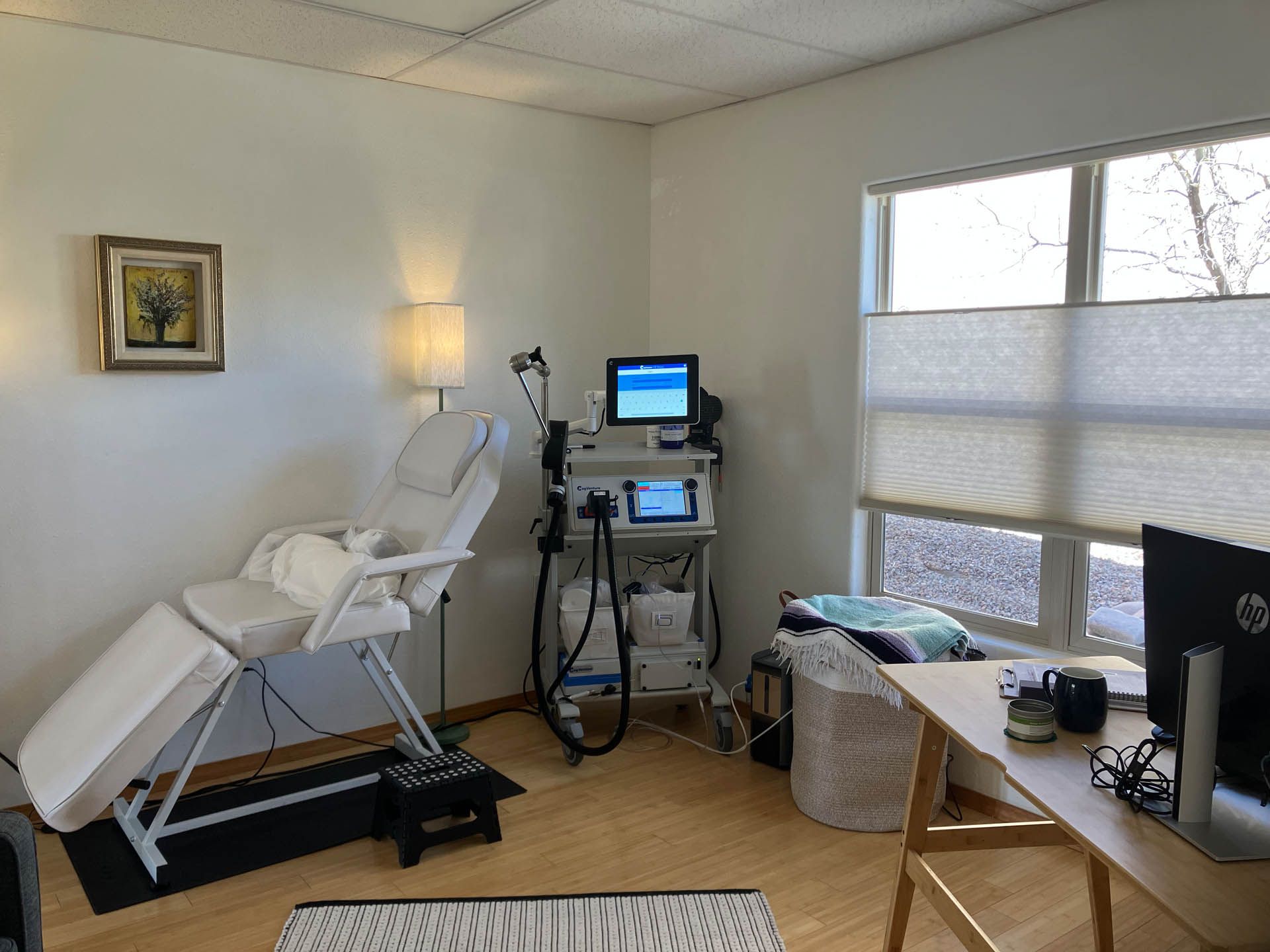
Transcranial Magnetic Stimulation, better known as TMS, has become an established clinical technology for certain psychiatric conditions.
TMS uses carefully targeted magnetic pulses to influence activity in specific areas and networks of the brain. Researchers have been studying TMS for decades, including its ability to modulate cortical activity and mechanisms associated with neuroplasticity.
Much of the clinical use of TMS has focused on treating illness. But the underlying technology has also prompted a much broader scientific question: Could neuromodulation be used to help the brain learn, adapt and function at its best?
That question is being investigated in healthy adults as well as in people experiencing cognitive difficulties.
A 2020 meta-analysis of 15 studies in healthy adults found that rTMS was associated with statistically significant effects in some cognitive domains, although the effects were varied according to the type of stimulation and cognitive function being measured. A more recent systematic review and meta-analysis examining 53 studies and more than 1,500 healthy participants likewise found evidence of cognitive effects.
In other words, the science is intriguing. And that's what makes this such an interesting frontier.
What about the aging brain?
Researchers have been investigating non-invasive brain stimulation as a way of supporting cognition in older adults for decades.
A systematic review of rTMS studies in older adults with cognitive impairment found evidence of cognitive benefit. Other reviews examining neuromodulation in healthy older adults have similarly described promising findings.
BDNF: one of the brain's plasticity-related proteins
One of the fascinating pieces of the neuroplasticity puzzle is brain-derived neurotrophic factor, or BDNF.
BDNF is a protein involved in neuronal health and in processes related to learning, memory and synaptic plasticity. TMS research has investigated BDNF and other biological mechanisms that may contribute to the brain's ability to adapt following stimulation.
Recent research continues to examine the relationship between BDNF biology and individual responses to rTMS. Scientists are still working to understand exactly how BDNF-related mechanisms interact with stimulation parameters and why some people respond differently than others.
This is one reason we find TMS so fascinating.
We aren't simply asking whether we can change a symptom.We are asking whether we can influence the brain's capacity to change.
What are clinicians seeing?
This is where our own experience becomes particularly interesting.
Research into TMS for cognitive enhancement and healthy brain aging is still emerging. Clinicians are seeing intriguing changes in patients that deserve further investigation.
At TMS New Mexico, we have been particularly struck by what we have observed in some of our older patients.
Patients sometimes describe changes that extend beyond the symptoms that originally brought them to treatment, things such as greater mental clarity, improved focus, increased motivation, or feeling more mentally engaged.
Peak performance isn't only for athletes
When we hear the term peak performance, we often picture professional athletes.
And there is growing interest in non-invasive brain stimulation within sports science. Researchers have investigated whether neuromodulation can influence motor learning, skill acquisition, attention, decision-making and other aspects of athletic performance. A recent critical review describes the field as promising but still developing, with important questions remaining about protocols, individual responses and the durability of effects.
But you don't have to be a professional athlete to care about performing at your best.
Peak performance might mean running a company.
Learning a musical instrument.
Writing a book.
Painting.
Learning a new language.
Playing tennis at 75.
Traveling the world.
Or simply remaining curious, engaged and mentally active.
Someone in their 70s or 80s may have no interest whatsoever in “slowing down.
”They want to keep learning. Keep creating. Keep participating.
And perhaps that gives us a different way to think about healthy brain aging.
Instead of asking only:
“How do I prevent decline?”
we can also ask:
“How do I keep my brain engaged, adaptable and capable of change?”
The emerging frontier of brain health
TMS is an established medical technology, and using it specifically for cognitive enhancement or peak performance in otherwise healthy individuals is an exciting emerging, off-label application. The research is ongoing.
At TMS New Mexico, our interest in this area comes from the intersection of neuroscience, emerging research and our own clinical experience.
We know that the brain remains capable of change throughout life.
We know that neuroplasticity is fundamental to learning and adaptation.
And we are increasingly interested in what may be possible when we intentionally engage those
mechanisms.
Your brain doesn't have to peak at 30.
It continues to learn.
It continues to adapt.
It continues to have the capacity for change.
Peak performance is about helping your brain make the most of the years ahead.
Explore Brain Vitality & Peak Performance
TMS New Mexico offers consultations for individuals interested in learning more about this
emerging application of TMS.If you're curious about neuroplasticity, cognitive vitality, healthy brain aging, or simply want to explore what may be possible, contact us to schedule a 20-minute consultation.
The use of TMS for cognitive enhancement and peak performance is an emerging, off-label application. Research in this area is ongoing. TMS is not currently established as a treatment to prevent age-related cognitive decline or dementia, and while clinically promising, individual responses vary.

SHARE ARTICLE
HELPFUL LINKS TO LEARN MORE
Book an appointment at our mental health clinic in Santa Fe, New Mexico. You are not alone!